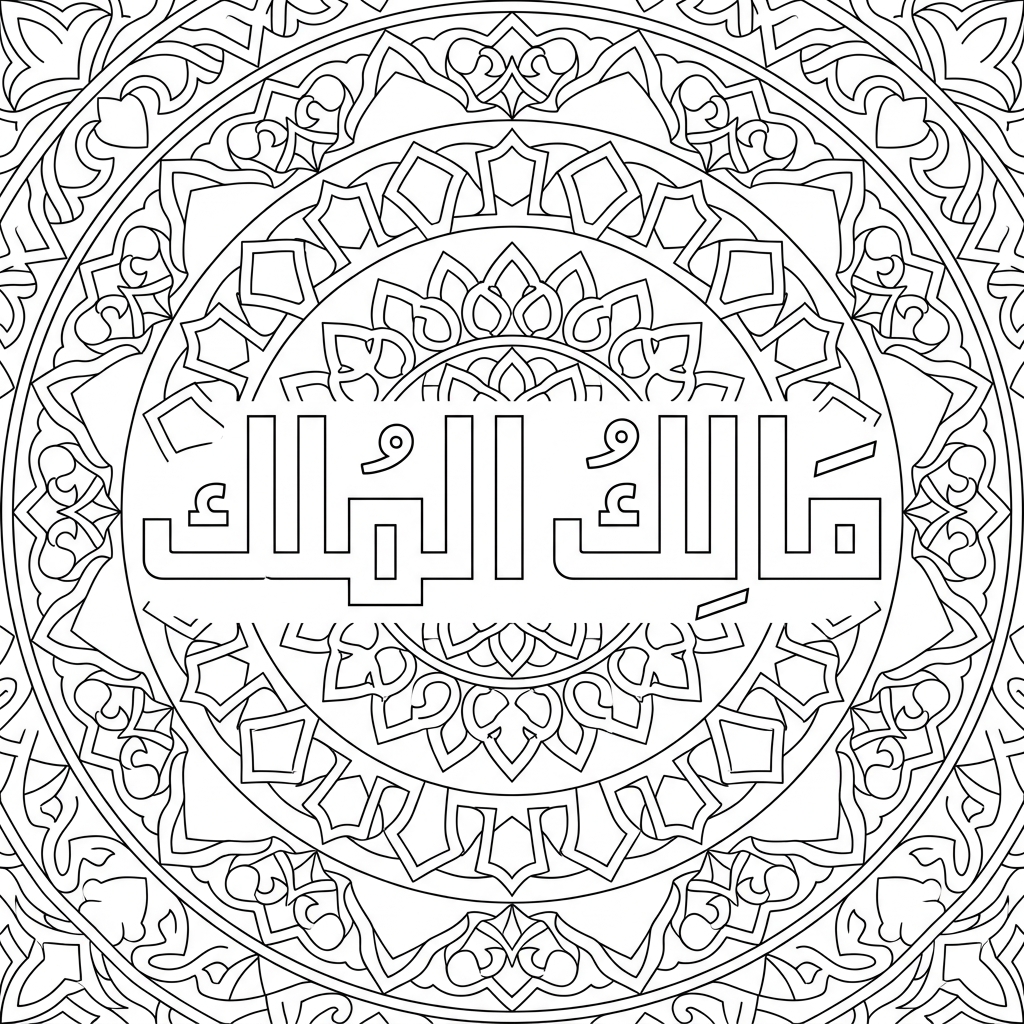
Islamic geometric patterns are among the most recognizable and admired art forms in the world. From the intricate tilework of the Alhambra to the soaring domes of Persian mosques, these patterns speak a universal language of beauty, order, and transcendence.
Why Geometry in Islamic Art?
In Islam, the depiction of living beings is generally avoided in sacred spaces. This led artists to develop an extraordinarily sophisticated vocabulary of abstract and geometric decoration. The circle — a symbol of unity and the infinite — serves as the foundation for all Islamic geometric patterns.
Getting Started: The Circle
Every Islamic geometric pattern begins with a circle. From this simple shape, artists construct:
Tools You Need
You don't need expensive equipment to start:
Your First Pattern: The 8-Pointed Star
The 8-pointed star is one of the most common and beautiful Islamic geometric motifs. Start with a circle, divide it into 8 equal parts, and connect specific points. The pattern emerges naturally from the underlying grid.
The Spiritual Dimension
Islamic geometers saw their craft as a form of contemplation. As the 10th-century mathematician and philosopher Al-Farabi wrote, geometry "trains the mind to think in an orderly fashion." The patterns remind us that beneath the apparent chaos of daily life lies a divine order — intricate, beautiful, and perfectly balanced.
Want to Learn More?
Our *Islamic Geometric Patterns* coloring book includes 50+ designs arranged from beginner to advanced, complete with construction guides. [Explore it here](/books/islamic-geometric-patterns).